Introduction
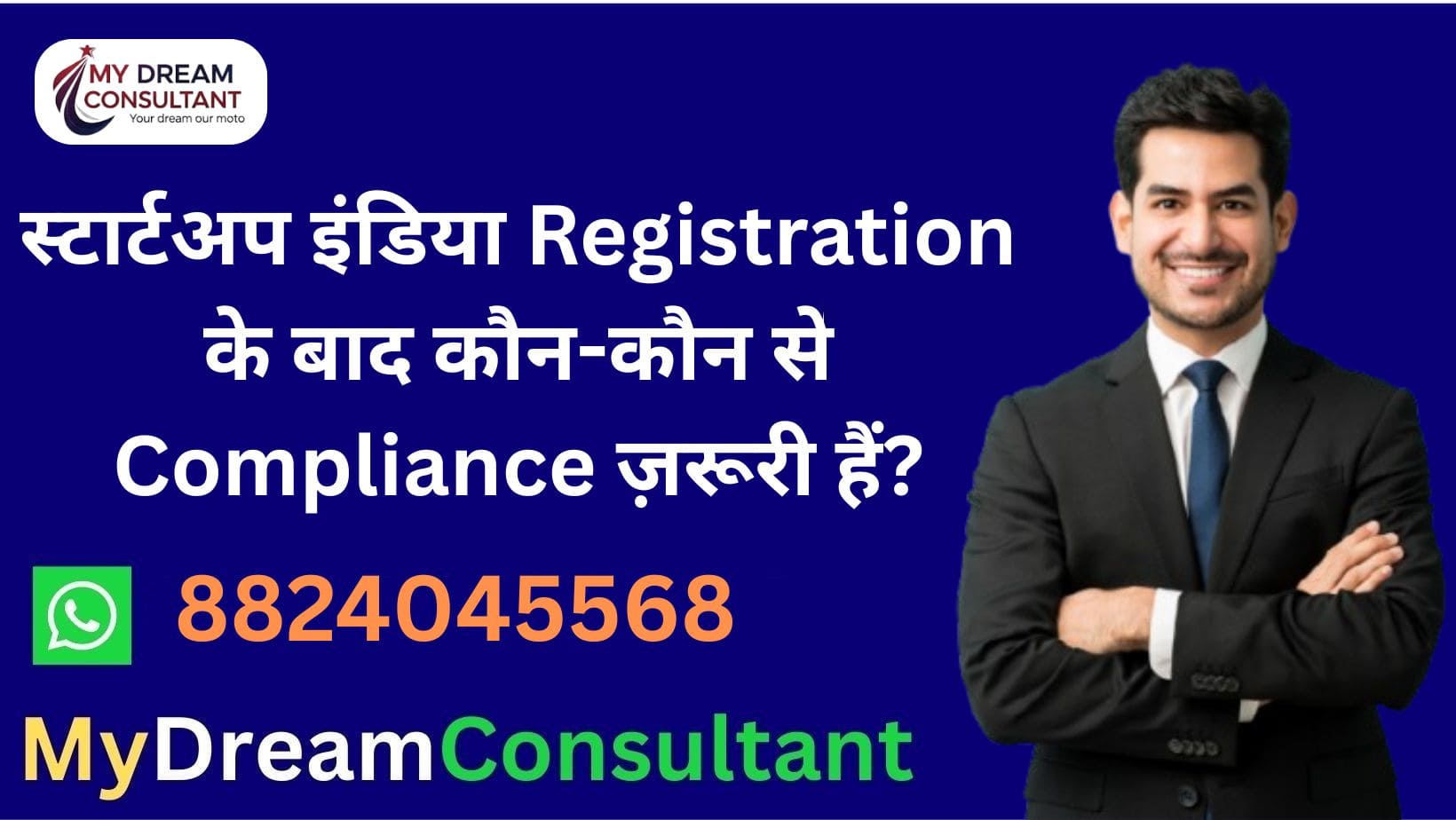
Registering your business under the Startup India Scheme is a major achievement for any entrepreneur. It not only validates your business idea but also provides access to tax exemptions, government funding, investor trust, and easier regulatory norms. However, many startups fail to realize that Startup India registration is not the end of the journey—it is the beginning of compliance responsibility.
Once your startup is recognized by DPIIT, the government expects timely filings, proper documentation, and legal discipline. Non-compliance can lead to penalties, disqualification from benefits, or even cancellation of Startup India recognition.
As a Top CA in Jaipur, My Dream Consultants has helped hundreds of startups remain compliant and grow confidently. In this blog, we explain all compliance requirements after Startup India registration in simple, easy-to-understand language with real-life examples.

What Is Post-Startup India Compliance?
Post-registration compliance refers to all statutory, tax, and regulatory obligations that a startup must follow after being recognized under Startup India. These compliances vary depending on your business structure—Private Limited Company, LLP, or Partnership Firm—but some rules apply to all.
Working with a Best CA for Startup India Scheme ensures that you never miss a deadline or benefit.
1. ROC Compliances – The Backbone of Corporate Governance
Every Startup registered as a Private Limited Company or LLP must comply with the Registrar of Companies (ROC) under the Ministry of Corporate Affairs (MCA).
Mandatory ROC Filings Include:
- AOC-4 – Filing of audited financial statements
- MGT-7 / MGT-7A – Annual return filing
- DIR-3 KYC – KYC of directors
- ADT-1 – Auditor appointment
⏰ Due Dates: Generally between September to November every year.
Real-Life Example
A fintech startup in Jaipur ignored ROC filings thinking they were optional for startups. As a result, directors had to pay heavy late fees and the company was marked as non-compliant. After consulting My Dream Consultants, the company regularized all filings and restored compliance status.
This is why founders prefer working with a Top CA for Startup India Scheme.
Start Your Company In Just A Click
—-! Click Here !—-
2. Income Tax Compliance – Even Loss-Making Startups Must File
Many startups operate at a loss during initial years. However, Income Tax Return (ITR) filing is compulsory, regardless of profit or loss.
Key Income Tax Requirements:
- Annual ITR filing
- Maintenance of books of accounts
- Tax audit (if applicable)
- Advance tax (if turnover increases)
Failure to file returns can lead to notices, penalties, and difficulty in raising funds.
A CA for Startup India Scheme helps you plan taxes efficiently and legally reduce liabilities.
3. GST Compliance – A Critical Area for Startups
If your startup is registered under GST, compliance becomes a monthly or quarterly responsibility.
GST Obligations:
- GSTR-1 – Outward supplies
- GSTR-3B – Summary return
- GSTR-9 – Annual return
- Proper invoice and expense tracking
Missing GST returns can block input tax credit and attract penalties.
📌 With support from a Best CA in Jaipur, GST compliance becomes simple and automated.
4. Startup India Annual Self-Certification
Every DPIIT-recognized startup must submit annual self-certification on the Startup India portal.
This confirms:
- The business is active
- The startup is working on innovation or scalability
- No violation of eligibility criteria
Skipping this step may result in revocation of Startup India recognition.
An experienced Online Startup India Registration Consultant ensures this filing is never missed.
5. Compliance for Tax Exemption Under Section 80-IAC
Startups approved for Income Tax Exemption under Section 80-IAC must follow additional rules.
Key Conditions:
- Audited financial statements
- Profit calculation accuracy
- Compliance with DPIIT guidelines
- Timely exemption filings
Improper documentation can lead to rejection of tax benefits.
A Best CA for Startup India Scheme ensures maximum exemption with minimum risk.
6. Labour Law & Employee-Related Compliances
Once your startup starts hiring employees, legal responsibilities increase.
Important Labour Compliances:
- Provident Fund (PF)
- ESIC
- Professional Tax
- Shops & Establishment Act registration
- Salary slips and payroll records
Startup India allows self-certification for labour laws, but records must be properly maintained.
7. Event-Based MCA Compliances
Certain changes require immediate filings with MCA, such as:
- Appointment or resignation of directors
- Change in registered office
- Share allotment to investors
- Funding rounds or equity dilution
Ignoring event-based compliance can create future legal and investor issues.
A Top CA in Jaipur ensures timely and error-free filings.
Why Choose My Dream Consultants for Startup Compliance?
At My Dream Consultants, we understand that founders want to focus on innovation, growth, and revenue—not paperwork.
Our Services Include:
- Complete Startup India compliance management
- ROC, GST & Income Tax filings
- Tax exemption and funding support
- Dedicated assistance from a Top CA for Startup India Scheme
We are trusted as a Best CA in Jaipur and a reliable Online Startup India Registration Consultant.
Conclusion
Startup India registration gives your business a strong foundation, but regular compliance is what keeps it strong and sustainable. Missing compliances can undo all the benefits you worked hard to achieve.
With professional guidance from My Dream Consultants, startups can stay compliant, save taxes, and grow with confidence.
If you want your startup to succeed without legal stress, connect with a CA for Startup India Scheme today.
FAQs – Compliance After Startup India Registration
Q1. Are compliances mandatory for startups with no turnover?
Yes, ROC and Income Tax compliances are mandatory even if there is no business activity.
Q2. Can Startup India recognition be cancelled?
Yes, non-compliance or false information can lead to cancellation.
Q3. Do startups get compliance relaxation?
Yes, startups enjoy self-certification and reduced penalties, but filings are still required.
Q4. Is GST mandatory for all startups?
Only if turnover crosses the threshold or interstate supply is involved.
Q5. Who is the best consultant for Startup India compliance?
My Dream Consultants, supported by experienced professionals and a Top CA in Jaipur, is a trusted choice.
#StartupIndia
#StartupIndiaRegistration
#StartupIndiaCompliance
#StartupCompliance
#BusinessCompliance
#StartupGuide
#IndianStartups
#NewBusinessIndia
#TopCAInJaipur
#BestCAInJaipur
#CAForStartupIndiaScheme
#BestCAForStartupIndiaScheme
#TopCAForStartupIndiaScheme