
Introduction
Have you ever wondered how the Income Tax Department knows about your large financial transactions? Many taxpayers believe that if they don’t mention certain transactions in their Income Tax Return (ITR), the department won’t know about them. However, that is no longer true.
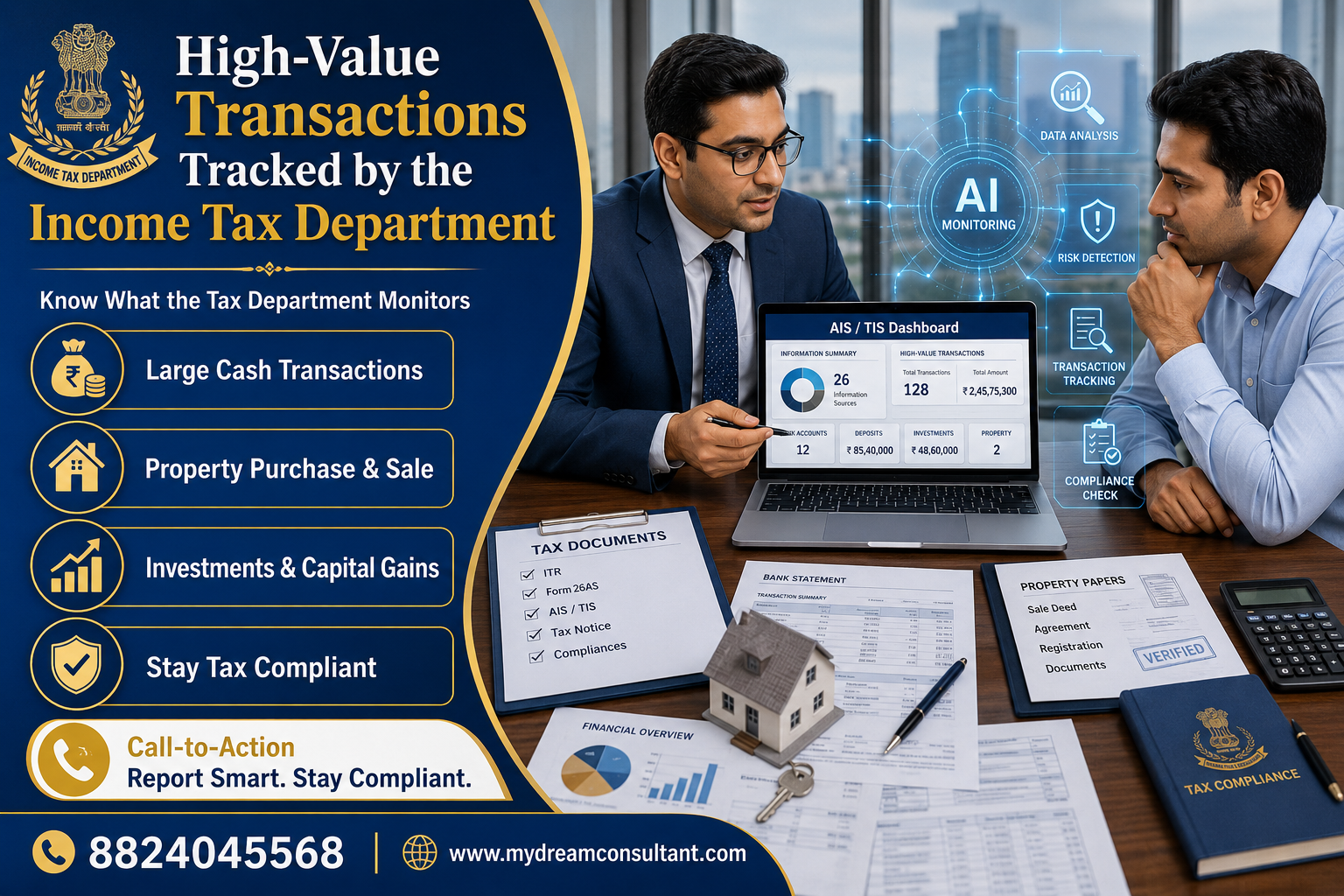
Today, the Income Tax Department uses advanced technology, Artificial Intelligence (AI), the Annual Information Statement (AIS), Taxpayer Information Summary (TIS), Form 26AS, and data received from banks, financial institutions, stock exchanges, mutual fund companies, property registrars, and other reporting entities to monitor high-value financial transactions.
Whether you purchase a luxury property, invest heavily in mutual funds, deposit large amounts of cash, or spend significantly using your credit card, these transactions may be reported to the Income Tax Department. If the reported transactions do not match your declared income, you may receive an Income Tax notice asking for clarification.
This does not mean every high-value transaction is illegal. The purpose is to promote transparency, reduce tax evasion, and ensure taxpayers accurately report their income.
This is why many individuals and businesses consult experienced Income Tax Consultants, the Top CA in Jaipur, or the Best CA in Jaipur for expert ITR Filing in Jaipur and tax planning. Proper reporting helps you avoid unnecessary notices and maintain complete tax compliance.
In this blog, we will explain what high-value transactions are, how the Income Tax Department tracks them, and how you can stay compliant.

What Are High-Value Transactions?
High-value transactions are financial activities involving significant amounts of money. Various institutions are required to report these transactions to the Income Tax Department under applicable reporting rules.
These transactions help the department compare your financial activities with the income disclosed in your Income Tax Return.
If there is a significant mismatch, the department may seek clarification.
Start Your Company In Just A Click
—-! Click Here !—-
Why Does the Income Tax Department Track High-Value Transactions?
The objective is not to trouble honest taxpayers.
The department tracks these transactions to:
- Detect undisclosed income
- Prevent tax evasion
- Improve tax transparency
- Verify income reported in ITR
- Identify suspicious financial activities
- Encourage voluntary tax compliance
With AI-based analytics, the department can quickly identify inconsistencies between your spending and reported income.
Common High-Value Transactions Monitored by the Income Tax Department
- Large Cash Deposits
Large cash deposits made into bank accounts may be reported to the Income Tax Department.
If the deposited amount does not match your reported income, you may receive a notice seeking an explanation.
Real-Life Example 1
Rahul deposited a substantial amount of cash into his savings account after selling ancestral jewellery.
Since the transaction appeared in the department’s reporting system but wasn’t properly explained in his tax records, he received a notice asking for supporting documents.
Fortunately, he maintained proper records and was able to justify the source of funds.
- Purchase or Sale of Property
Real estate transactions are among the most closely monitored financial activities.
Whether you purchase a residential flat, commercial property, or plot, the transaction details may be reported through the property registration system.
Always ensure the source of funds is properly documented.
- High-Value Credit Card Payments
Large payments towards credit card bills may also be monitored.
If your spending is significantly higher than your reported income, the department may seek clarification.
- Large Investments in Mutual Funds or Shares
Investments made in:
- Mutual Funds
- Equity Shares
- Bonds
- Securities
are generally reflected in financial reporting systems.
Capital gains and investment income should always be reported correctly while filing your ITR.
Real-Life Example 2
Priya invested a significant amount in equity mutual funds during the financial year.
While filing her ITR, she reported only her salary income and forgot to disclose capital gains from redeemed units.
Since the transactions were already available in her AIS, she later received an Income Tax notice requesting clarification.
- Fixed Deposit Investments
Banks report certain high-value fixed deposit transactions.
Interest earned on these deposits should also be reported in your Income Tax Return.
Ignoring interest income is one of the most common filing mistakes.
- Purchase of Luxury Assets
Purchasing expensive assets such as luxury cars, jewellery, or other high-value items may attract reporting requirements.
Always maintain proper invoices and payment records.
- Foreign Travel Expenses
Significant spending on foreign travel may also be reflected in financial reporting systems.
If your reported income appears insufficient compared to your travel expenses, the department may request clarification.
- Foreign Investments and Overseas Income
Taxpayers earning foreign income or holding overseas assets should disclose them wherever applicable under the Income Tax Act.
Failure to report foreign income may result in serious compliance issues.
Real-Life Example 3
Amit worked abroad for a few years before returning to India.
While filing his ITR, he overlooked certain foreign investment disclosures.
After receiving professional guidance, he filed the necessary corrections and ensured compliance.
- Business Transactions
Business owners should accurately report:
- Business receipts
- Cash sales
- Digital transactions
- Purchases
- Expenses
Discrepancies between GST records and Income Tax filings can trigger scrutiny.
- Large Loan Transactions
Borrowing or repaying significant loans without adequate documentation may also invite questions from tax authorities.
Maintain proper agreements and bank records.
How Does the Income Tax Department Track These Transactions?
The department receives information from multiple sources, including:
- Banks
- Financial Institutions
- Property Registration Authorities
- Mutual Fund Companies
- Stock Exchanges
- Employers
- Insurance Companies
- Government Departments
This information is consolidated into:
- Annual Information Statement (AIS)
- Taxpayer Information Summary (TIS)
- Form 26AS
These systems allow the department to compare your financial activities with your declared income.
Common Mistakes That Trigger Notices
Avoid these common errors:
Not Reporting All Sources of Income
Include salary, business income, interest, rental income, capital gains, and other taxable income.
Ignoring AIS and TIS
Always verify your reported transactions before filing your ITR.
Incorrect Capital Gains Reporting
Investment transactions should be reported accurately.
Claiming Unsupported Deductions
Only claim deductions backed by proper documentation.
Filing the Wrong ITR Form
Choose the correct ITR form based on your income sources.
Real-Life Example 4
Rohit purchased a property during the financial year using income accumulated over several years.
Although the purchase was genuine, he failed to maintain supporting documentation explaining the source of funds.
When the department sought clarification, gathering the required documents became difficult and delayed the resolution.
How to Avoid Income Tax Notices
Follow these best practices:
- Report every source of income.
- Review AIS, TIS, and Form 26AS before filing.
- Maintain proper financial records.
- Preserve invoices and bank statements.
- Report capital gains correctly.
- Disclose high-value transactions honestly.
- File your ITR before the due date.
- Consult a qualified tax professional whenever required.
Benefits of Proper Tax Compliance
Maintaining accurate tax records offers several benefits:
- Faster processing of ITR
- Timely tax refunds
- Reduced risk of notices
- Better financial credibility
- Peace of mind
- Easier loan approvals
- Stronger compliance history
Why Professional Tax Guidance Matters
Modern tax compliance goes far beyond filling out an ITR form.
Professional tax experts can help you:
- Review AIS and TIS
- Verify high-value transactions
- Report capital gains accurately
- Select the correct ITR form
- Plan taxes legally
- Respond to Income Tax notices
- Maintain complete compliance
This is why many taxpayers search online for:
- Top CA in Jaipur
- Best CA in Jaipur
- ITR Filing in Jaipur
- Income Tax Consultants
- ITR Filing Near Me
Professional guidance helps reduce errors and ensures complete peace of mind.
Conclusion
The Income Tax Department’s technology has become smarter than ever. High-value financial transactions are now reported through multiple channels, making it easier for authorities to identify inconsistencies between your income and your spending.
There is no need to fear high-value transactions if they are genuine and properly documented. The key is transparency, accurate reporting, and maintaining supporting records.
Before filing your Income Tax Return, always review your AIS, TIS, Form 26AS, and financial records to ensure everything matches.
If you are looking for the Best CA in Jaipur, Top CA in Jaipur, reliable Income Tax Consultants, or expert assistance for ITR Filing in Jaipur, professional advice can help you stay compliant, avoid notices, and file your taxes with confidence.
Remember, honest reporting today can save you from unnecessary tax complications tomorrow.
Frequently Asked Questions (FAQs)
- What is a high-value transaction?
A high-value transaction is a significant financial activity that may be reported to the Income Tax Department by banks, financial institutions, or other reporting entities.
- Does every high-value transaction result in an Income Tax notice?
No. Genuine transactions supported by proper documentation generally do not create problems. Notices are more likely when there are mismatches or unexplained transactions.
- How can I check the transactions reported to the Income Tax Department?
You can review your Annual Information Statement (AIS), Taxpayer Information Summary (TIS), and Form 26AS through the Income Tax e-filing portal.
- Should I report bank interest in my ITR?
Yes. Interest earned from savings accounts, fixed deposits, and other bank deposits should be reported wherever applicable.
- Can property purchases trigger Income Tax scrutiny?
Yes. Property transactions are monitored, so maintaining proper documentation and reporting the source of funds is important.
- Are mutual fund investments reported to the Income Tax Department?
Yes. Investment and redemption details may appear in your AIS and should be reported accurately in your Income Tax Return.
- How can I avoid an Income Tax notice?
Report all income honestly, review AIS/TIS/Form 26AS, maintain supporting documents, and file your ITR accurately.
- Should I consult a tax professional before filing my ITR?
Yes. An experienced tax consultant can help reconcile your financial records, ensure compliance, maximize eligible deductions, and reduce the risk of notices.
#IncomeTaxIndia
#IncomeTax
#HighValueTransactions
#IncomeTaxDepartment
#IncomeTaxNotice
#ITRFiling
#IncomeTaxReturn
#ITR2026
#CAinJaipur
#BestCAinJaipur
#TopCAinJaipur